

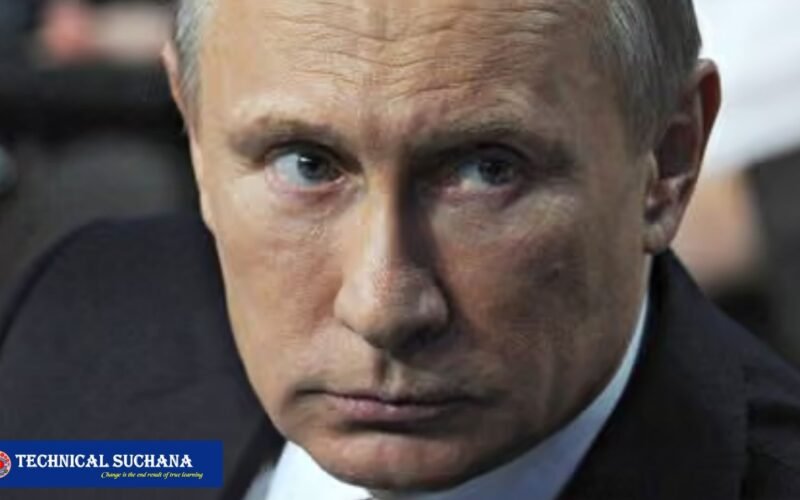
KATHMANDU – Russian President Vladimir Putin is currently on a two-day official visit to neighboring India. While he has solidified his reputation as one of the most powerful figures in global politics, there is one domain where the Russian leader is conspicuously absent: the digital world.
Putin does not carry a smartphone, nor does he use social media. In fact, he refrains from using the internet entirely, viewing the World Wide Web with deep suspicion.
Years ago, Putin famously labeled the internet a “CIA project.” He views the American intelligence community, specifically the Central Intelligence Agency (CIA), as a primary threat to Russia. To understand Putin’s digital detachment, one must look at his “Internet Theory.”
The ‘CIA Project’ Allegation
According to a report by the British newspaper The Guardian, Putin made his stance clear during a press conference in St. Petersburg in April 2014. It was there that he publicly alleged the internet was originally a CIA project and claimed that the agency continues to develop and influence it today.
This statement drew global attention, highlighting the Russian President’s belief that the digital sphere is an extension of American influence.
Fears of Espionage
Putin’s skepticism was likely fueled by major leaks in 2013. Former National Security Agency (NSA) contractor Edward Snowden revealed that the United States was conducting massive surveillance operations through social media platforms like Facebook and Skype.
Following these revelations, countries like Germany and Brazil began debating American control over the internet. Putin used these events to validate his long-held belief that the internet is a tool for Western intelligence agencies to conduct espionage.
A Sovereign Russian Internet?
For years, President Putin has advocated for a separate, domestic internet infrastructure for Russia. He argues that the current open internet poses a threat to Russia’s national interests and that the country needs to protect its “online sovereignty.”
However, this push has raised concerns among critics who fear a domestic internet would allow the Russian government to infringe on citizens’ privacy.
Interestingly, Edward Snowden, who was granted asylum in Russia, once challenged Putin on this issue during a televised call-in show. Snowden asked if Russia engaged in mass surveillance of its citizens’ communications.
Putin replied with a laugh, saying, “I hope we don’t do that. Because we don’t have as much money as America.”
Fact Check: Who Actually Created the Internet?
Contrary to President Putin’s theory, the internet was not the invention of a single spy agency. Its creation was a multi-stage evolution involving various institutions:
- 1960s: The Advanced Research Projects Agency Network (ARPANET) was developed by the U.S. Department of Defense for research communication.
- 1983: ARPANET adopted the protocols that allowed it to evolve into the modern internet.
- 1989: British scientist Tim Berners-Lee invented the World Wide Web (WWW), which made the internet accessible and navigable for the general public.