

Kathmandu.
As the use of Artificial Intelligence (AI) continues to grow, both its positive and negative aspects are coming to light. While we usually hear incidents of fraud involving the misuse of technology, a recent case has emerged where a youth used the AI tool ‘ChatGPT’ to expose an online scammer.

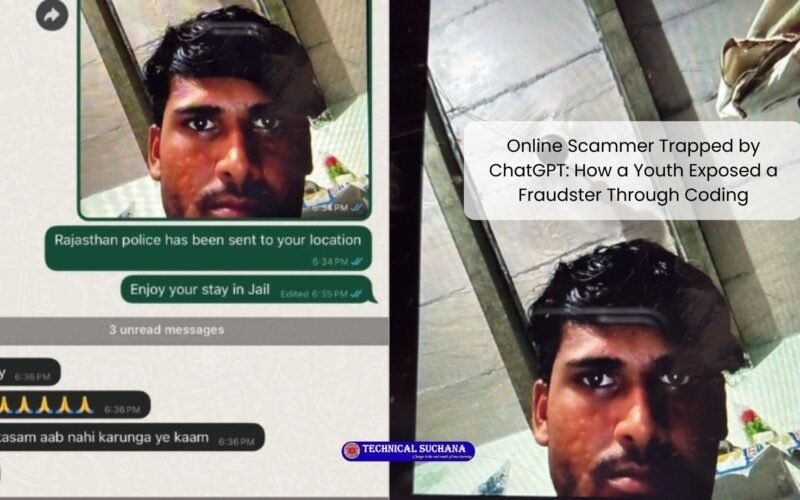
In this incident, which took place in India, a ‘tech-savvy’ youth identified the location and photo of a person trying to scam him via Facebook and forced the fraudster to apologize by threatening legal action.
Details of the Incident
According to Reddit user ‘@RailfanHS’, he received a message on Facebook from a profile appearing to belong to a familiar person. This acquaintance was actually an IAS (Indian Administrative Service) officer. In the message sent from the hacked or fake profile, it was stated that the officer’s friend had been transferred and was selling household furniture and goods at a cheap price.
To gain trust, the scammer proceeded with the conversation using a WhatsApp number that featured a profile picture of someone in an army uniform. Since the youth already possessed the real officer’s contact number, he cross-verified the information and confirmed that it was a scam operation.
Use of ChatGPT and the ‘Digital Trap’
After the scammer sent a QR Code to receive payment for the goods, the youth decided to teach the fraudster a lesson. With the help of ChatGPT, he prepared a special code (script). This code was designed to access the user’s GPS location and the device’s front camera.
The youth sent the tracking link to the scammer, saying, “There is a problem making the payment; please upload the QR code to this link, and the money will be deposited immediately.” Driven by greed and haste, the scammer clicked the link without caution. Consequently, his real location and a photo of his face were recorded in the youth’s system.
Scammer in Panic
The scammer panicked upon realizing that his cover was blown and that his location and photo were now in the victim’s possession. After the youth sent these details back to the scammer and threatened to file a police complaint, the fraudster apologized in fear and promised not to commit such acts in the future.
Awareness and ReactionSince this incident became public, the creative use of AI is being praised on social media. However, cyber security experts have urged the general public not to click on unfamiliar links and to remain cautious when chasing cheap offers.
To avoid online fraud, police suggest that if anyone asks for money or help on social media, one should immediately call and verify with the person concerned. Furthermore, if any suspicious activity is observed, it should be reported to the Cyber Bureau.